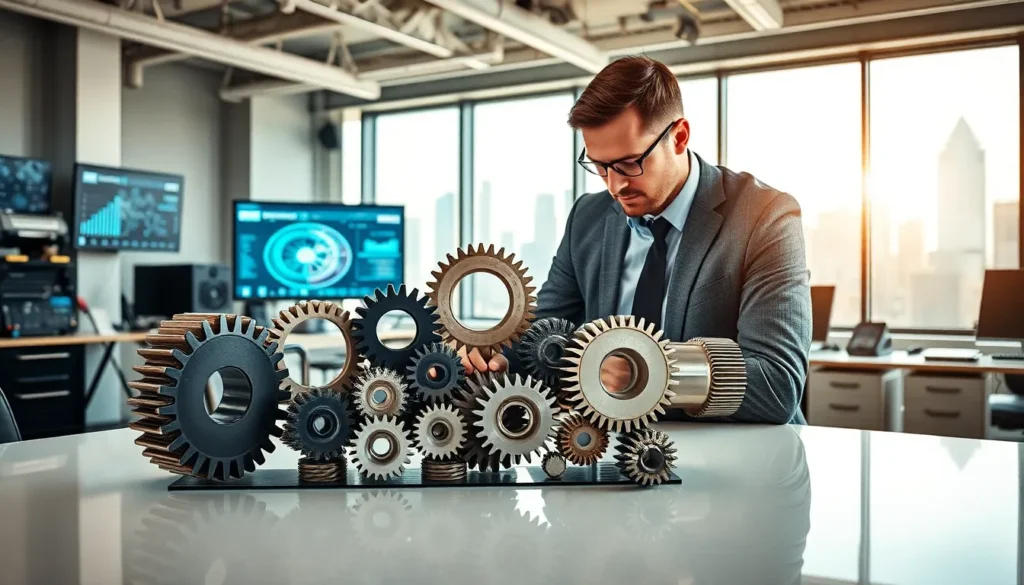
Ever wondered how complex machines whir to life with the simple turn of a knob? Welcome to the intriguing realm of gears. In an age where technology rules, gears are the unsung heroes, quietly making everything from your car to your favorite kitchen appliance work seamlessly. Buckle up, because we’re about to investigate into the nitty-gritty of what gears really are, their types, how they operate, and why they matter. Get ready for a ride filled with information that might just impress your next date.
Understanding Gear: An Overview
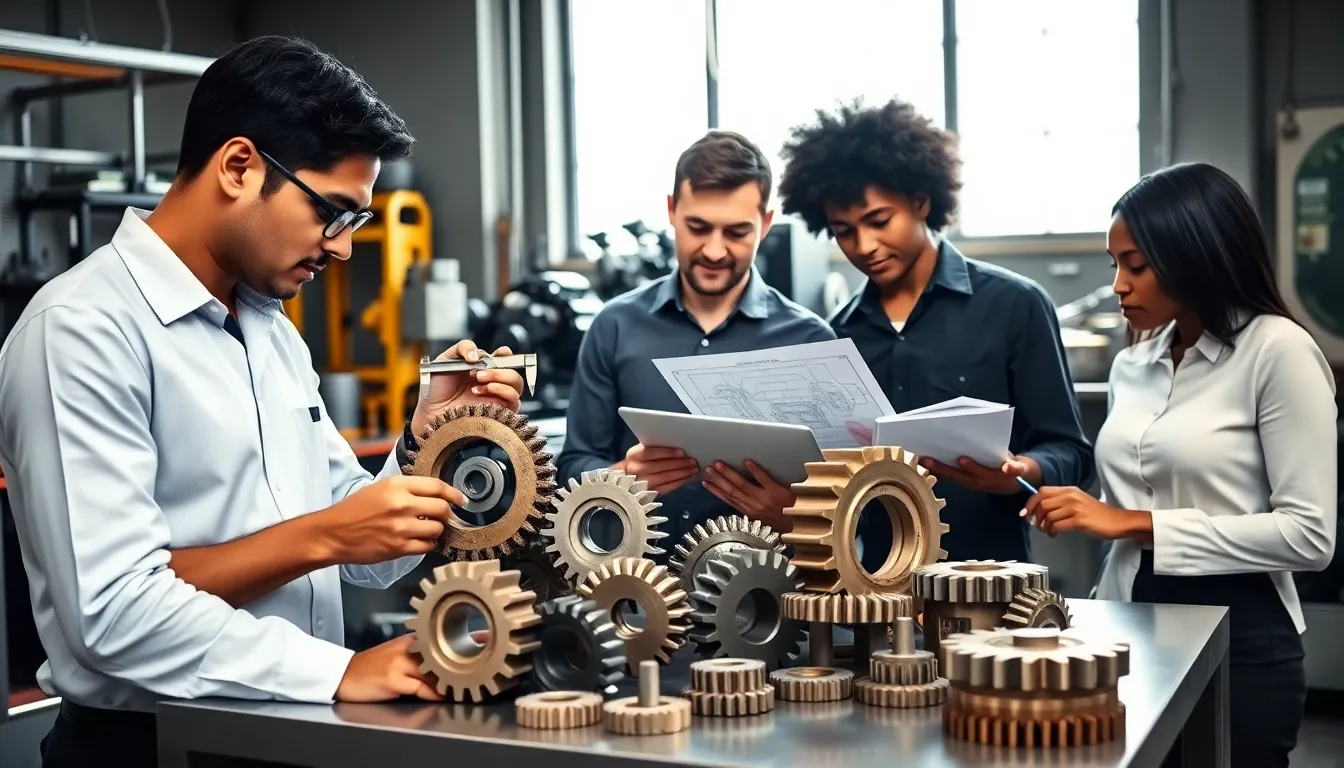
Gears are mechanical components used to transfer motion and torque between machine parts. They interact through teeth, which mesh together to create rotational movement. The beauty of gears lies in their ability to change the speed, torque, and direction of motion, functioning like the backbone of many complex systems.
But why should one care about gears? Well, they are everywhere. From your bicycle to industrial machinery, if there’s movement, there’s usually a gear (or a dozen) involved. Understanding gears provides insight into the mechanics behind everyday items, revealing a wondrous world of engineering ingenuity.
Types of Gears
Various types of gears serve distinct purposes, each designed with a specific function. Here’s a closer look at the most common types:
1. Spur Gears
Probably the most recognizable type, spur gears have straight teeth and are mounted on parallel shafts. They are efficient at transmitting power but can be noisy.
2. Helical Gears
Helical gears feature teeth that are angled, allowing for smoother engagement. They’re quieter and more durable than spur gears, making them ideal for high-speed applications.
3. Bevel Gears
These gears are bent at an angle, usually found in applications that require changing the axis of rotation. They come in various types, including straight, spiral, and hypoid.
4. Worm Gears
Worm gears consist of a worm and a worm wheel. They allow for significant gear reduction and are used where space is limited, such as in elevators.
5. Rack and Pinion
This unique combination converts rotational motion into linear motion. It’s commonly found in steering systems of vehicles, giving precise control to the driver.
How Gears Work
A gear’s primary function revolves around its teeth. When one gear turns, its teeth push against the teeth of another gear, transferring motion and force. The gear ratios come into play here, determining the speed and torque output.
For instance, when a larger gear is connected to a smaller gear, the larger turns slowly while the smaller spins quickly. Conversely, if two gears have the same size, they turn at the same rate. This principle is essential for understanding why gears change speed and power effectively in machinery.
The alignment and materials used in gears also play crucial roles in their performance. They need to be precisely manufactured to prevent wear and tear over time.
Applications of Gears in Various Industries
Gears find applications across a wide array of industries. Here are some notable examples:
1. Automotive Industry
In cars, gears are vital for transmission systems, transferring power from the engine to the wheels. They control speed and allow for smooth acceleration.
2. Aerospace
Aircraft rely heavily on gears for their landing gear mechanics and various flight control systems, ensuring safety and operational efficiency.
3. Manufacturing
From conveyor belts to robotic arms, gears orchestrate movement in manufacturing plants, improving productivity and accuracy.
4. Home Appliances
Washing machines, microwaves, and refrigerators all use gears to effectively manage motion and functionality. This makes daily tasks easier and more efficient.
5. Robotics
Gears are foundational in robotics for precise motion control, allowing robots to perform intricate tasks with impressive accuracy.
The Importance of Choosing the Right Gear
Selecting the appropriate gear is not just a matter of preference: it’s pivotal for ensuring optimal performance. An incompatible gear can lead to inefficiency, increased wear, or even machinery failure. Engineers consider factors like material, size, and type when designing systems.
The right gear ensures effective torque distribution and provides longevity, which eventually saves time and costs. Also, with advancements in technology, new materials and designs have emerged, improving the capabilities of gears across various applications.
Future Trends in Gear Technology
As industries evolve, so do gear technologies. Here are some trends to watch:
1. Advanced Materials
Innovations in materials, such as composites and advanced alloys, improve gear performance by increasing strength and reducing weight.
2. Smart Gears
With the rise of IoT, smart gears are being developed to monitor performance in real-time, providing predictive maintenance to avoid failures.
3. Customization
3D printing is paving the way for customized gears tailored to specific applications, enhancing efficiency while reducing costs.
4. Sustainability
Eco-friendly materials and processes are becoming a focus. Manufacturers are now prioritizing sustainable practices, which could revolutionize the gears industry.